If England and Ghana meet in a 2026 FIFA World Cup group game, it has the makings of a compelling contest: Ghana’s athleticism and transitional threat against England’s structure, depth, and tournament-hardened approach. While World Cup matches are rarely straightforward, England enter this kind of matchup with a set of repeatable advantages that tend to translate well in group-stage football.
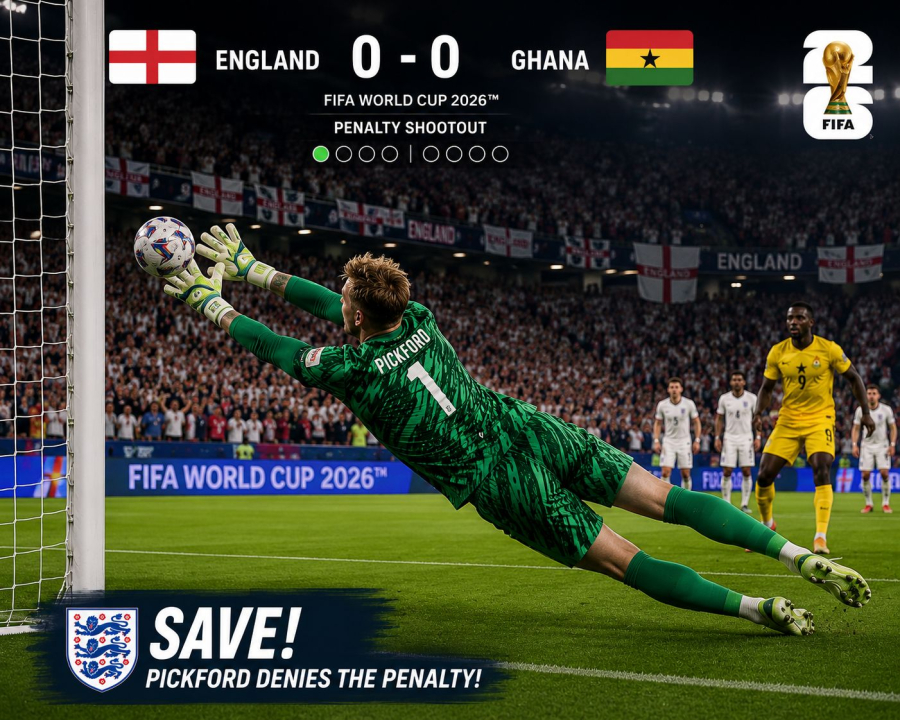
This preview focuses on the practical reasons England would be well-positioned to win: squad quality across lines, tactical flexibility, set-piece value, and the ability to manage different game states. It also highlights how England’s recent tournament trajectory supports confidence without assuming any specific 2026 squad list or match result.
Why group games reward structure, depth, and game management
Group-stage matches are often decided by fine margins: a single set piece, one transition moment, or the ability to stay patient when the opponent defends deep. The teams that consistently progress tend to combine three ingredients:
- Reliable chance creation against varied defensive shapes.
- Control without overexposure when opponents counter quickly.
- Solutions from the bench when the initial plan needs a tweak.
England’s recent tournament profile aligns strongly with these requirements. They have repeatedly shown an ability to win tight matches, manage tempo, and use set pieces and wide play to create separation on the scoreboard.
England’s biggest edge: depth and quality across the pitch
In international football, depth is not just about having “good substitutes.” It is about having different types of high-level players who can change the rhythm of a game without weakening the overall structure.
1) Defensive platform built for tournament football
England’s top advantage in group games is often their capacity to start with a stable defensive platform and layer attacking control on top of it. When England are at their best, they:
- Defend the box well and limit high-quality shots.
- Recover quickly after losing the ball, reducing counterattacking exposure.
- Maintain spacing between lines so opponents struggle to play through the middle.
Against a side like Ghana, whose danger can spike in transition, England’s ability to keep rest-defense organized (the players positioned to prevent counters) is a major win-condition. It helps turn chaotic moments into controlled sequences.
2) Midfield control and tempo-setting
World Cup group matches are frequently won by the team that dictates tempo: accelerating when the opponent is unbalanced, and slowing play when risk is unnecessary. England are well-positioned here because they typically have access to midfield profiles that can:
- Progress the ball through passing or ball-carrying.
- Protect transitions by screening counters and winning second balls.
- Switch play to isolate wingers and create crossing or cutback opportunities.
That blend matters versus Ghana, who can look most dangerous when games become open and end-to-end. England’s ability to keep possession purposeful (not sterile) is a practical tool for lowering volatility while still creating chances.
3) Multi-lane attacking options (not just one route)
One of England’s most persuasive strengths is that they can create goals in multiple ways. In a group-stage setting, that versatility is a significant advantage because opponents rarely give you the same picture for 90 minutes.
England can typically threaten through:
- Wide isolation to create 1v1s and deliver crosses or cutbacks.
- Half-space combinations that lead to through balls or shots at the edge of the box.
- Fast transitions when Ghana commit numbers forward.
- Set pieces as a high-leverage scoring channel.
When an opponent closes one door, England often have another. That matters because Ghana may alternate between compact defending and sudden, aggressive counters—two game states that require different attacking answers.
Set pieces: a repeatable advantage in World Cup group games
Set pieces are not “bonus” chances at the World Cup—they are frequently the difference between finishing first in a group or sweating the final matchday. England’s set-piece pedigree in recent tournaments has been a consistent talking point, and it remains a key reason they would be well-positioned against Ghana.
Why set pieces tilt matchups:
- They travel well: routines and delivery are less affected by opponent style.
- They punish fouls that often occur when opponents try to stop transitions.
- They reduce variance: even on a day when open-play rhythm is off, a single dead-ball moment can decide the game.
If Ghana defend deep for spells, set pieces give England a direct mechanism to turn territorial dominance into goals.
England’s tournament experience: confidence that is earned, not assumed
England’s recent major-tournament record provides a strong foundation for optimism in any group-stage matchup, including one against Ghana. Without projecting a specific 2026 outcome, it is fair to say England have repeatedly demonstrated they can navigate pressure environments and knockout-level intensity.
Recent highlights that support England’s positioning:
- 2018 World Cup: reached the semi-finals.
- UEFA Euro 2020: reached the final.
- 2022 World Cup: reached the quarter-finals.
These runs matter because group games are as much about managing expectations and moments as they are about tactics. Teams with repeated deep runs often show stronger in-game composure: fewer reckless transitions conceded, better decision-making when leading, and more patience when the breakthrough takes time.
Matchup dynamics: how England can make Ghana’s strengths less decisive
Ghana’s upside is real. Historically, Ghana have produced dynamic, athletic teams with match-winners capable of turning a single moment into a goal. In recent cycles, Ghana have had attacking talent that can carry the ball, shoot from range, and attack space quickly. In a one-off group game, that is always a threat profile to respect.
England’s advantage is that their best game model directly targets the typical risk points Ghana may rely on:
1) Reduce transition volume
England can prioritize ball security in key zones—especially the central corridor—so Ghana do not get repeated counterattacking runs. This does not mean playing slow; it means choosing when to accelerate and ensuring coverage behind the ball.
2) Force Ghana into longer defensive phases
The longer Ghana defend without possession, the more the game tends to become about concentration, spacing, and set-piece discipline. England’s patient circulation and ability to switch play can stretch defensive blocks and create higher-quality crossing and cutback situations.
3) Win the second-ball battle
Many World Cup group matches become “scrappy” in the middle third, especially when one team is protecting space and the other is pushing for a goal. England’s capacity to win second balls and immediately re-attack can keep Ghana pinned back and increase shot volume over time.
Key benefits England bring into this potential group game
- Multiple paths to goal (wide play, combinations, transitions, and set pieces).
- Bench impact that can raise tempo or add control late on.
- Game-state competence: England have shown they can lead, chase, and manage tight scorelines.
- Big-tournament familiarity from recent deep runs.
- Defensive organization that can limit the frequency of Ghana’s best moments.
Snapshot comparison: where England’s advantages show up
| Match factor | Why it matters in a group game | Why England are well-positioned |
|---|---|---|
| Squad depth | Fresh legs and tactical changes often decide the last 30 minutes | England typically have like-for-like quality plus different profiles off the bench |
| Set pieces | Low-chance games are frequently settled by dead-ball moments | England have a strong recent record of generating goals from rehearsed routines |
| Tempo control | Reducing chaos limits opponent counterattacking upside | England can circulate possession with intent and protect central zones |
| Chance variety | Opponents adjust; you need more than one attacking route | England can attack wide, through the half-spaces, and in transition |
| Tournament experience | Composure improves decision-making in tight moments | England have multiple deep runs in recent major tournaments |
What an England win could look like (realistic pathways)
Even when England are favored, the most persuasive previews focus on how the win can materialize. Against Ghana, three realistic pathways stand out:
1) Early control, late separation
England establish territory and limit counters, then convert pressure into a goal in the second half—often with help from substitutions and set pieces as fatigue increases.
2) Set-piece breakthrough
A match that stays compact can be decided by one high-quality delivery, a second-ball finish, or a well-timed run at a corner or wide free kick.
3) Transition strike after Ghana open up
If Ghana commit numbers forward searching for a result, England’s pace and timing in transition can produce a decisive chance—especially in the space behind advancing fullbacks or midfielders.
Why this is a strong spot for England in the group-stage puzzle
Group games are about collecting points while minimizing risk. If England and Ghana meet, England are well-positioned because their strengths are the ones that consistently deliver at World Cups: structured defending, varied chance creation, set-piece threat, and the kind of tournament experience that supports calm execution.
Ghana can absolutely make it competitive—quality and athleticism guarantee that. But England’s broader toolkit gives them more ways to control the match, more ways to score, and more ways to respond if the game takes an unexpected turn. In a group-stage setting where small edges matter, those advantages add up.
Quick takeaways
- England’s depth and tactical flexibility are ideal for group-stage problem-solving.
- Set pieces provide a repeatable scoring route in tight World Cup matches.
- England’s recent tournament runs support confidence in their game management.
- Against Ghana’s transition threat, England can win by controlling risk and choosing the right moments to accelerate.
If this matchup appears on the 2026 group-stage schedule, England will have clear, credible reasons to feel confident—built on strengths that have already translated on the biggest international stages.
