Knockout football rewards teams that marry clear principles with flexible in-game problem solving. If England face Ghana at the FIFA World Cup 2026, the opportunity is to turn England’s strengths into repeatable advantages: controlled possession without overexposure, high-value chance creation, and ruthless efficiency on set pieces.
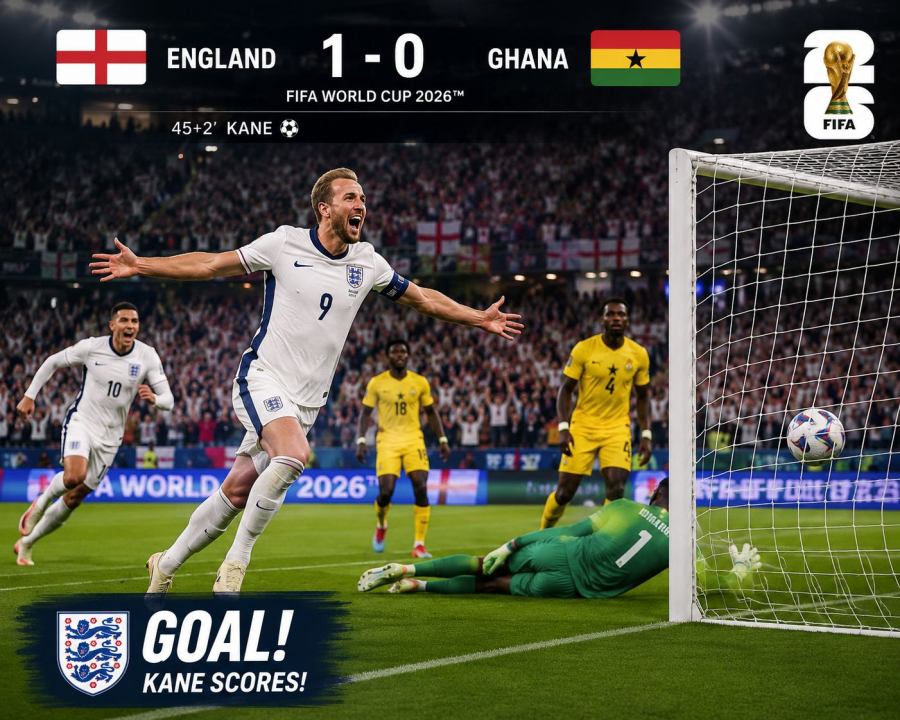
This guide lays out a practical, benefit-driven game plan England can use in a tournament setting. It avoids guesswork about exact lineups or match events and focuses on tactical levers that consistently win World Cup ties: managing transitions, exploiting space behind pressure, and forcing opponents to defend in uncomfortable zones.
Start with the matchup: what England can aim to control
In a World Cup setting, matches are often decided by a handful of moments: a turnover in midfield, a set piece, a 1v1 in the box, or a late-game substitution swing. England’s best path is to reduce randomness while still creating enough attacking volume to score first.
Against Ghana, a sensible assumption is that England may face:
- Athletic counterattacks when possession is turned over.
- Direct vertical play into runners and wide channels.
- High emotional energy early in the game and after big moments.
England’s tactical objective is simple and powerful: own the middle, protect the ball, and win the high-value moments.
Winning tactic #1: Build with a “rest defense” that kills counters before they start
At international tournaments, the quickest way to lose control is to push too many players ahead of the ball without a protective structure. A strong rest defense (the shape behind the attack) lets England attack confidently while remaining safe against transition threats.
How England can structure it
- Hold a stable back line in possession rather than both fullbacks going at once.
- Keep a dedicated holding midfielder screening central space to intercept first passes forward.
- Stagger midfield lines so at least one midfielder is positioned to counterpress immediately on loss.
Why it works (benefit)
This reduces Ghana’s best chances: fast breaks into open grass. When counters are slowed or forced wide, England can reset, protect the box, and re-attack from secure positions.
Winning tactic #2: Use controlled tempo to drain Ghana’s pressing power
One of England’s biggest advantages in tournament football is the ability to manage pace: speed up when the opening is there, slow down when the opponent wants chaos.
Practical tempo tools
- Circulate through the pivot to invite pressure and then play through it.
- Switch play with purpose to move Ghana’s block laterally and create isolated wide defenders.
- Use “third-man” combinations to break the first press without risky dribbles in central zones.
Why it works (benefit)
Ghana’s most dangerous phase can be the first 20 minutes, when energy is highest. By controlling tempo, England can turn that intensity into fatigue, opening space in the second half for decisive attacks.
Winning tactic #3: Attack the half-spaces to create higher-quality chances
International defenses are usually compact in the middle. The most reliable way to create big chances is to access the half-spaces (the channels between central defenders and fullbacks), especially near the edge of the penalty area.
What England can do
- Position an attacking midfielder between lines to receive on the half-turn.
- Use underlapping runs from deeper positions to arrive in the box undetected.
- Combine wide-to-inside: winger holds width, midfielder attacks inside pocket, striker pins center backs.
Why it works (benefit)
Half-space entries are more likely to produce cutbacks, low crosses, and shots from prime zones. Those actions typically outperform hopeful crosses because they force defenders to face their own goal and defend while moving.
Winning tactic #4: Make width a weapon, not a habit
“Get it wide and cross” can become predictable if used without variation. England can make width devastating by using it as a trigger to create either isolation or overload, depending on what Ghana show defensively.
Two width modes England can toggle
- Isolation mode: keep the far side tucked in, leave one winger 1v1, attack with quick support runs.
- Overload-to-switch mode: build a 3v2 on one flank to draw defenders, then quickly switch to the opposite side for a free attacker.
Why it works (benefit)
It forces Ghana to make uncomfortable choices: step out and risk space behind, or stay compact and allow clean deliveries from better angles.
Winning tactic #5: Prioritize cutbacks and low crosses over high aerial volume
High crosses can be useful, but the most efficient open-play chance creation in modern tournament football often comes from cutbacks (balls pulled back from the byline or inside the box to late runners).
How to engineer cutbacks
- Arrive with numbers: ensure at least two runners attack the penalty spot and the edge of the box.
- Get to the byline through overlaps, quick one-twos, and dribble accelerations.
- Use the “second wave”: a midfielder arriving late can shoot first time from the top of the box.
Why it works (benefit)
Cutbacks attack defenders’ blind spots and create shots from central, high-probability zones. This is a repeatable way to score even when the opponent defends deep.
Winning tactic #6: Win the set-piece battle with rehearsed variety
Set pieces are a defining edge in World Cups because they compress randomness into repeatable patterns. England can tilt the match with a multi-option plan rather than predictable deliveries.
Corner and free-kick variety England can use
- Near-post flick routines to create chaos and second balls.
- Screen-and-release movements to free a primary header at the far post.
- Short corner triggers to change the angle and force a defender to step out.
- Second-phase structure to keep pressure after the first clearance.
Why it works (benefit)
Against strong athletes, clever movement and timing can be more valuable than pure power. Rehearsed variety makes Ghana hesitate, and hesitation is enough to lose a mark.
Winning tactic #7: Defend wide transitions with “funnel and trap” pressing
When Ghana break, the danger often escalates if they can drive through the center or combine quickly around the box. England can defend transitions by funneling play into predictable lanes and then trapping the ball carrier.
What “funnel and trap” looks like
- Angle the first presser to force the ball wide rather than straight ahead.
- Use touchline as an extra defender by pressing in pairs near the sideline.
- Protect the center with a holding midfielder who blocks the pass inside.
Why it works (benefit)
It limits the most dangerous passes and forces Ghana into lower-percentage options: long diagonals under pressure or early crosses from deep.
Winning tactic #8: Make the first goal feel like two
In tournament football, scoring first often changes everything: risk profiles, spacing, and substitution timing. England can maximize the value of a first goal by immediately shifting into a smarter control phase.
Post-goal control principles
- Keep possession for 3 to 5 minutes to reduce emotional momentum swings.
- Attack selectively: choose moments to accelerate, but avoid unnecessary central turnovers.
- Force Ghana to chase by circulating through safe zones and switching play.
Why it works (benefit)
This turns a lead into psychological leverage. Ghana must open up, and that can create cleaner counterattacking chances for England later.
Winning tactic #9: Use substitutions as tactical upgrades, not just fresh legs
Coaches who treat substitutions as a system change often win tight World Cup matches. England can plan changes that alter the game’s geometry rather than only replacing tired players.
Three substitution “packages” England can prepare
- Protect-the-lead package: add a ball-winning midfielder, keep pace on the wings for counter threats.
- Break-the-block package: add a creative passer between the lines and a runner who attacks the back post.
- Chaos-in-the-box package: introduce a strong aerial presence and increase set-piece pressure.
Why it works (benefit)
Instead of reacting to the match, England can dictate it. Each package has a clear purpose and forces Ghana to adapt under fatigue.
Match plan template: a clear, tournament-ready approach
Here is a simple blueprint England can apply without relying on a single formation. It focuses on phases and triggers, which travel well in World Cup football.
| Phase | England priority | Key behaviors | What it wins |
|---|---|---|---|
| First 15 minutes | Stability and control | Secure build-up, avoid central turnovers, early switches | Quiet stadium energy, reduce Ghana transition chances |
| Middle of first half | Half-space access | Third-man runs, underlaps, cutback patterns | Higher-quality shots, defensive disorganization |
| Before halftime | Set-piece pressure | Win corners, deliver varied routines | High-leverage scoring chances |
| Start of second half | Tempo management | Possession with purpose, selective accelerations | Opponent fatigue, more space between lines |
| Final 30 minutes | Game-state mastery | Substitution packages, rest defense discipline | Close out lead or create late winner |
Key principles England can repeat no matter the lineup
World Cup matches change quickly. These principles keep England effective even if the opponent’s shape or match state shifts:
- Protect the center first in and out of possession.
- Attack with a safety net through a disciplined rest defense.
- Create chances from the half-spaces and prioritize cutbacks.
- Turn set pieces into a scoring plan, not a hope.
- Use game states (0-0, leading, trailing) as tactical prompts for tempo and risk.
Conclusion: England’s clearest route to winning
If England meet Ghana at the FIFA World Cup 2026, the most persuasive path to victory is not a single “magic” formation. It is a collection of controllable edges: disciplined transition protection, purposeful possession, half-space chance creation, and a set-piece program designed to produce goals under pressure.
Do those things consistently, and England give themselves the best tournament advantage of all: the ability to win even when the game is tight, emotional, and decided by moments.
